2 hr
Bo-Kaap & Cape Town Historical Walking Tour
Discover the soul of Cape Town through its vibrant neighborhoods, historic landmarks, and cultural stories
Reserve
Hand-picked by our editors — only the best 5 culinary experiences from 18 reviewed
Verified partners for every tour, free cancellation where available, and instant confirmation on every booking.
2 hr
Discover the soul of Cape Town through its vibrant neighborhoods, historic landmarks, and cultural stories
Reserve
2 hr 30 min
Master traditional Cape Malay dishes in a local chef's colorful Bo-Kaap home with hands-on cooking and lunch
Reserve
2 hr
Discover the soul of Cape Town through its historic neighborhoods, vibrant markets, and powerful stories
ReservePrices from verified partners. Availability updates in real time at checkout. Free cancellation policies apply where shown.
The landmarks, rooms, and views travelers on this tour remember — all visible on a single visit.
The oldest mosque in South Africa, established in 1794, stands as a central pillar of the local community. It is a historic site where visitors can learn about the early Cape Malay Islamic traditions.
Housed in a mid-18th-century structure, this museum offers an intimate look at the lives of early Muslim families in the area. It contains historical artifacts and displays regarding the neighborhood's heritage.
Famous as a long-standing local spice store, this shop is essential for those seeking authentic Cape Malay ingredients. It has served generations of locals and professional chefs in Cape Town.
These bright, historic homes represent a symbol of freedom after the abolition of slavery. Many feature a mix of Cape Dutch and Georgian architectural styles.
This is the first Muslim cemetery in the area, holding deep historical significance for the residents of Bo-Kaap. It provides a quiet, reflective space on the slopes of the hill.
The walking tour provides a comprehensive overview of Cape Malay heritage through local vendors, whereas the cooking class offers a deeper, practical engagement with traditional recipes. These options complement each other; most visitors who do both find the Bo-Kaap Malay Cooking Class more skill-intensive.
| Feature | Top pick Walking Food Tour | Malay Cooking Class |
|---|---|---|
Activity Type |
Guided street exploration | |
Primary Focus |
Culinary tasting and landmarks | |
Duration |
2.5–3 hours | |
Physical Exertion |
Moderate walking | |
Level of Cultural Immersion |
Observation and storytelling | |
Group Setting |
Small public groups | |
| See tickets → |
Verdict: Opt for the bo kaap walking food tour if you prioritize sightseeing, or choose the cooking class if you prefer to master local culinary techniques in a private kitchen setting.
Choose your ticket, select your date, and reserve in under two minutes. Secure checkout handled by our verified partner.
Instant confirmation by email, with a mobile voucher you can save offline. No printing, no queuing at a collection desk.
Arrive at the entrance, show your voucher on your phone, and walk in. Most tickets include priority or skip-the-line access.
Practical details for your visit straight from our verified partners — hours, access, rules, and how to get there.
71 Wale St, Bo-Kaap, Cape Town
Common starting point for walking tours
Use the MyCiTi bus service to reach the city center, then walk up Wale Street.
Convenient drop-off at the entrance of the Bo-Kaap neighborhood.
5-minute walk from the central business district up the main incline.
Dress conservatively as this is a residential and predominantly Muslim neighborhood. Ensure shoulders, chests, and legs are covered, and carry a headscarf if you plan to visit a mosque.
Keep belongings secure and out of sight in a crossbody bag or front-facing pack. Avoid flashing expensive cameras or phones while navigating the streets.
Respect privacy by asking permission before photographing residents or their homes. Do not block doorways, sit on private steps, or rearrange property for a photo.
The neighborhood is characterized by steep, cobbled roads that may be challenging for those with limited mobility. Some historical buildings do not have wheelchair access.
Stay alert and avoid distracted walking while using your phone. Use it for navigation or photos, then tuck it away to remain aware of your surroundings.
The area is family-friendly, but keep children close due to narrow, active streets. Engage them with the cultural history and vibrant colors rather than just sightseeing.
Support local Cape Malay businesses by purchasing snacks or meals from community-run kitchens and delis. Always dispose of trash in designated bins to keep the neighborhood clean.
Pets should be leashed at all times if brought through the neighborhood. Please be mindful of local cultural attitudes toward animals in public residential spaces.
The bo kaap walking food tour operates as an outdoor experience in a public residential suburb. Always prioritize community respect over photographic opportunity.
71 Wale St, Bo-Kaap, Cape Town
Common starting point for walking tours
Get directionsBest time to go, insider tips, nearby landmarks, and the cancellation fine print — flip through to skim what matters to you.
How crowds, weather, and events shift across the year.
Warmer weather and blooming flora make for pleasant walking conditions.
Peak season with clear, directional light ideal for bright photography.
Reduced crowds and manageable temperatures for exploring the streets.
Cooler and wetter, but excellent for cozying up with warm Cape Malay curries.
Small details that turn a good visit into a great one.
Arrive before 09:00 for the best morning light and to avoid the largest groups of daily tourists.
Book a bo kaap walking food tour with a resident to support the community directly.
Visit during golden hour at the intersection of Wale Street and Rose Street for iconic lighting.
Do not climb on private steps or block residential driveways for photos.
Purchase spices or crafts from local vendors instead of mass-market souvenir shops.
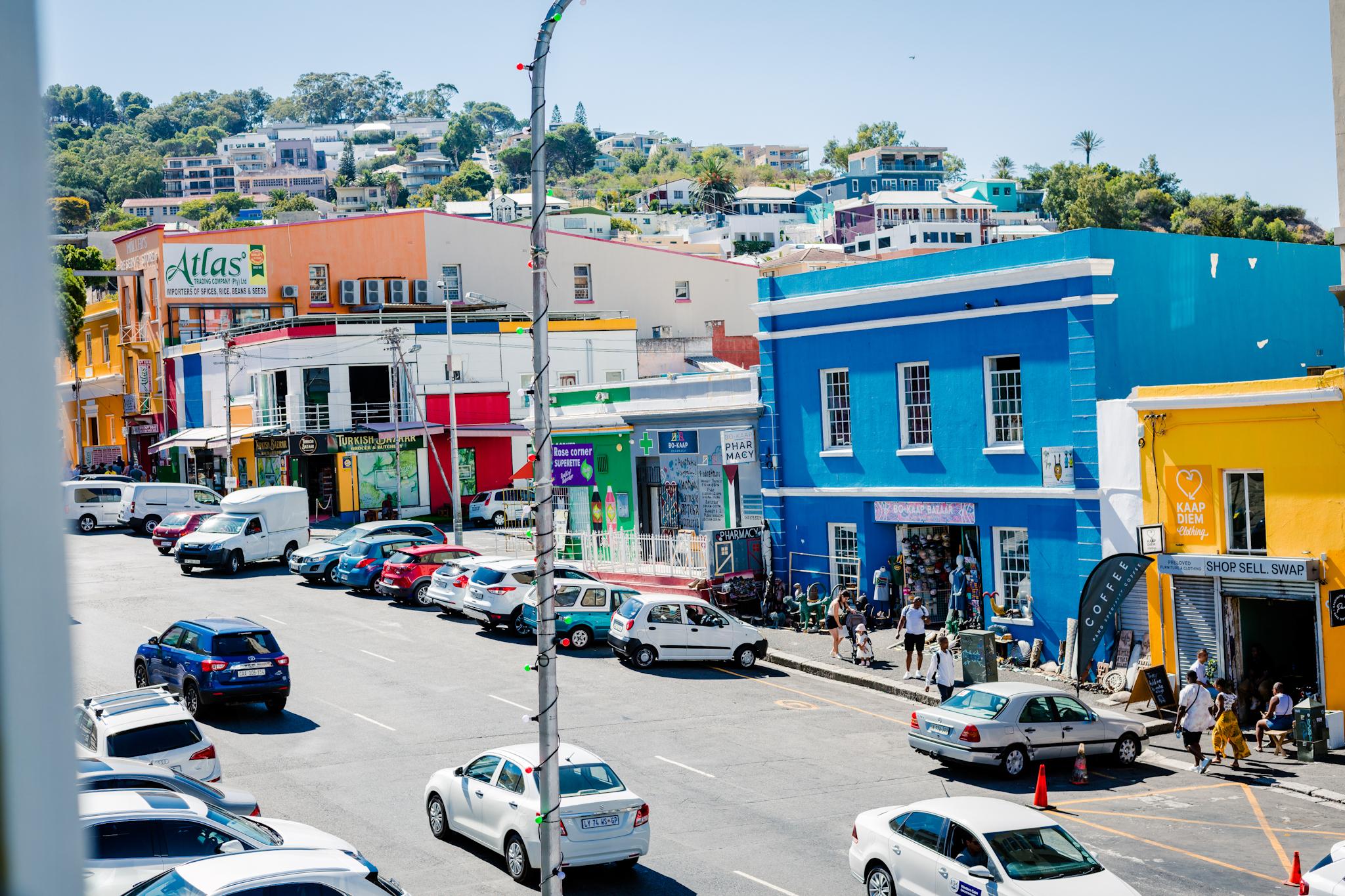
Look for Atlas Trading for authentic local spices and baking ingredients.
Non-bookable sights within a short walk — free to visit, easy to pair.
The first established mosque in South Africa, built in 1794.
A preserved 18th-century home showcasing local Islamic heritage.
Historic cemetery offering insight into early Cape Muslim burials.
Iconic public park in the city center with historic trees.
Flexible, no hidden fees.
Flexible cancellation is available for most bo kaap walking food tour experiences. Please verify the specific provider's terms for a full refund window.
Hand-picked options within walking distance — pick a district for vibe, or a specific hotel for convenience.
Centrally located with heritage-inspired decor.
Multiple options located on the fringe of the neighborhood.
Various options available within walking distance of the district.
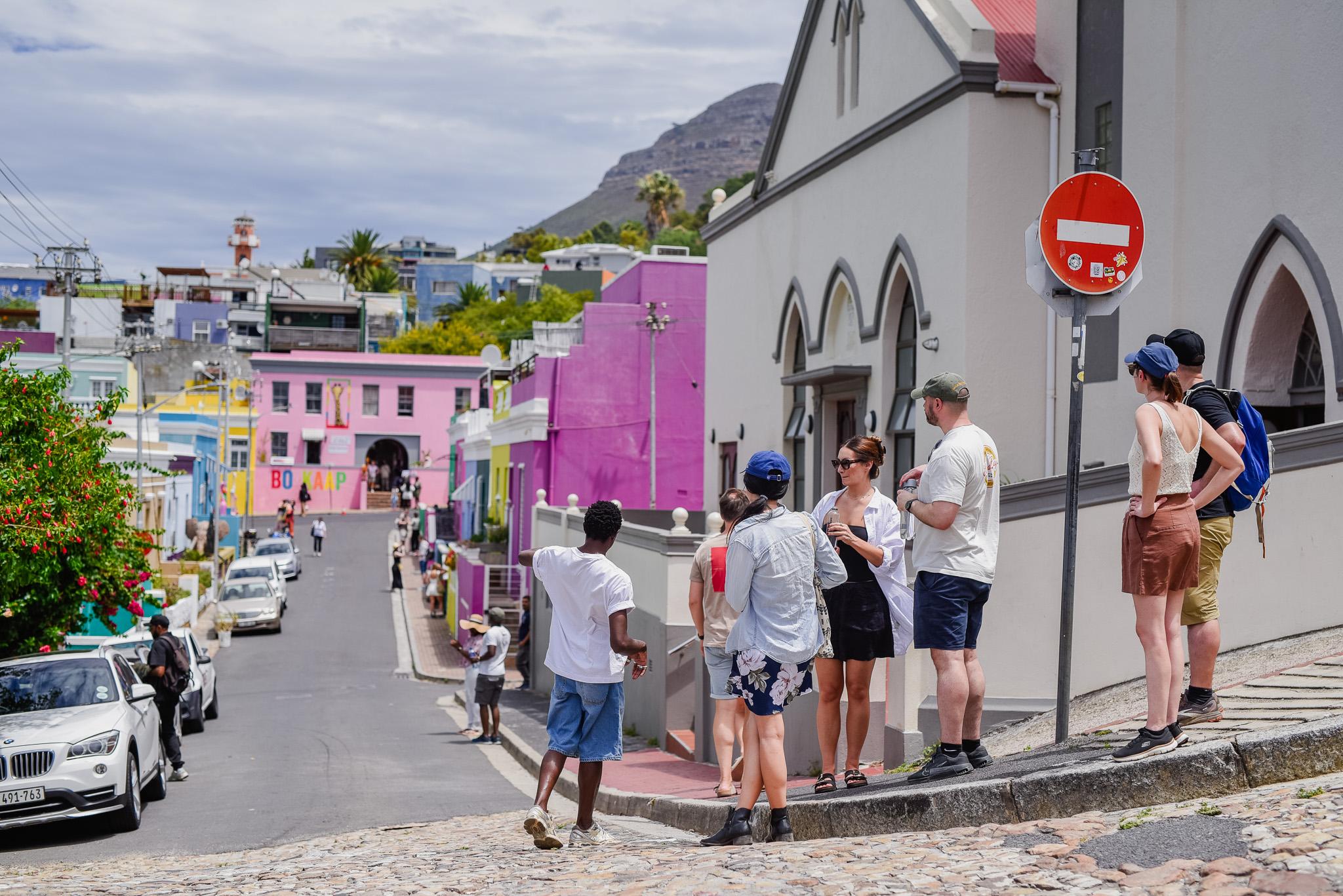
The Bo-Kaap district rises on the lower slopes of Signal Hill in 144 streets that were surveyed in 1763 as huurhuisjes — rental cottages leased to freed slaves, artisans, and political exiles from the Dutch East Indies. By 1834, when emancipation reached the Cape Colony, the quarter had become the epicenter of Cape Malay identity, a term that describes not geographic origin but the convergence of Javanese, Sumatran, Bengali, and Malagasy communities who arrived as convict laborers, political prisoners, and skilled craftsmen between 1658 and 1808. Today the neighborhood's 300 preserved Georgian and Cape Dutch facades, painted in saturated cobalt, fuchsia, and saffron since the apartheid era's legal recognition of property rights, form the most photographed streetscape in Cape Town. The culinary architecture of Bo-Kaap rests on three pillars: the spice trade routes that moved tamarind, fennel, and cardamom from Java to Table Bay; the sosatie and bredie recipes encoded by enslaved cooks working in colonial kitchens; and the halal dietary framework introduced by Islamic scholars exiled by the VOC for opposing Dutch rule. A bo kaap walking food tour opens access to family-run spice shops where bulk turmeric and coriander seed are weighed in paper cones, koesisters are fried in clarified butter each morning before 9am, and fourth-generation bakers still proof dough for denningvleis pies in wood-fired ovens installed in 1902. The district's nine mosques, including the Auwal — the first in sub-Saharan Africa, built in 1794 by Tuan Guru after his release from Robben Island — anchor a food culture where Friday prayers and communal iftar meals during Ramadan reinforce recipes passed through oral instruction rather than written record. Bo-Kaap's culinary significance extends beyond its 0.47 square kilometers. The Cape Malay Choir Board, founded in 1939 and headquartered on Chiappini Street, preserves not only the Afrikaans-language moppies and ghoemaliedjies sung during New Year celebrations but also the roti and samosa recipes prepared for post-performance suppers. UNESCO's 2021 inscription of the district on its tentative World Heritage list cited both architectural integrity and intangible cultural practices, including the transmission of Cape Malay cuisine through informal apprenticeships in domestic kitchens. Walking food tours here negotiate a district where 72 percent of residents are direct descendants of the original freed-slave population, where property values have increased 340 percent since 2015, and where every turmeric-stained recipe card carries the weight of survival, resistance, and deliberate memory against three centuries of colonial and apartheid law designed to erase precisely this: the fact that flavor, like freedom, can be archived in the body and passed forward through the act of cooking together.

"Every turmeric-stained recipe card carries the weight of survival, resistance, and deliberate memory against three centuries of law designed to erase the fact that flavor can be archived in the body."
A step-by-step walkthrough of the visit — what you'll see, how long each stage takes, and the details that matter.
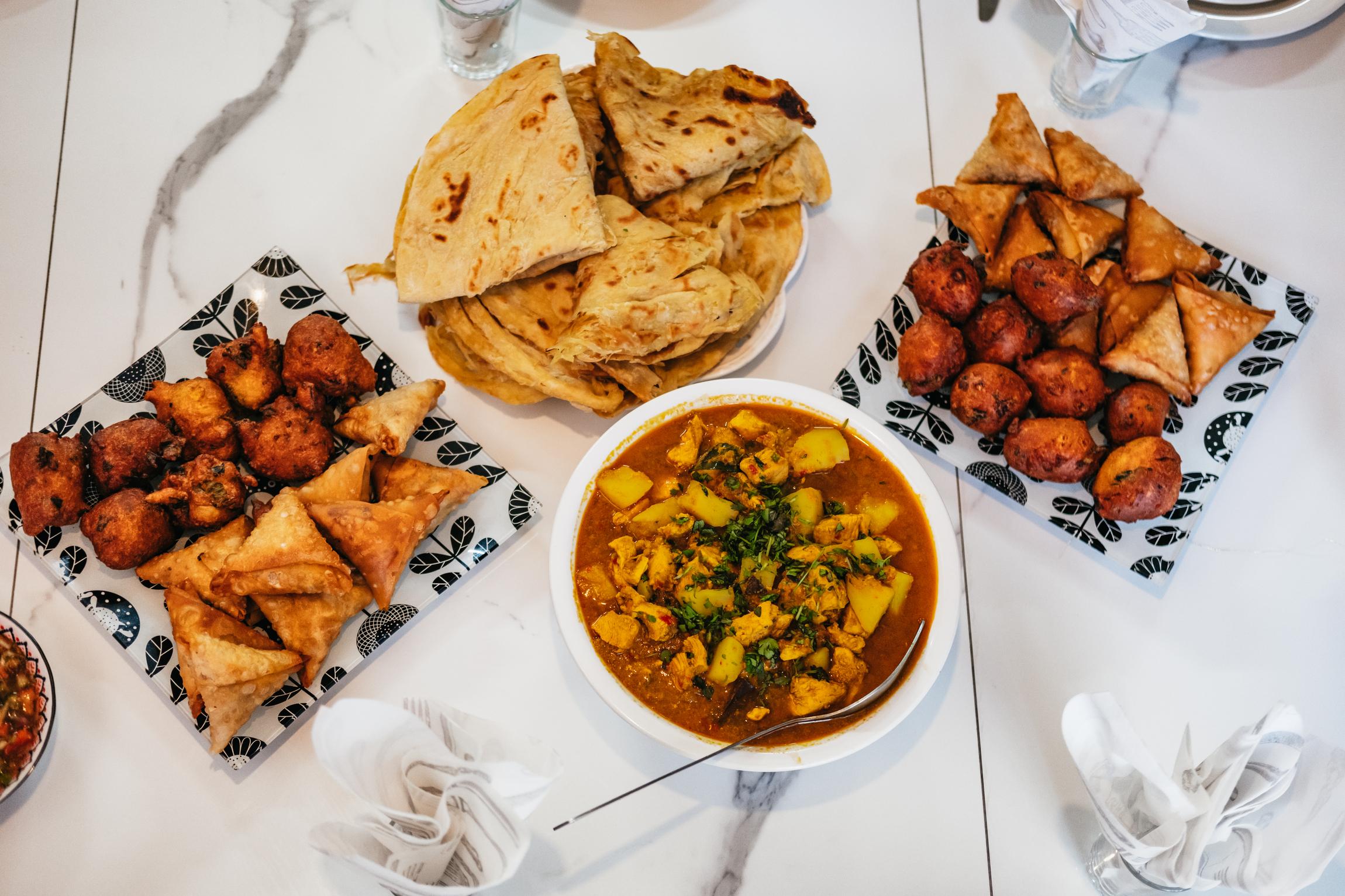
You meet your guide at the Bo-Kaap Museum on Wale Street, where the original 1768 lease documents and a reconstructed 19th-century kitchen set the historical frame. Within five minutes you're standing in Atlas Trading Company, a spice merchant operating since 1946, where your guide measures out fennel seed and explains the difference between Javanese and Indian curry powder formulations. You taste a still-warm koesister — the syrup-soaked doughnut twist that must be eaten within two hours of frying — from a bakery on Chiappini Street, then climb Rose Street's 12-percent gradient to photograph the cobalt and magenta row houses that appear on every Cape Town postcard. Mid-tour you enter a private home where a resident cook demonstrates bobotie preparation, the spiced mince dish baked with an egg custard top that arrived with Javanese exiles in the 1660s. You sit at a family table for a three-course Cape Malay lunch: chicken bredie slow-cooked with cinnamon and dried apricots, saffron-tinted rice, and a wedge of melktert for dessert. The meal lasts 45 minutes. Afterward you walk the perimeter of the Auwal Mosque, hear the story of Tuan Guru's 13-year imprisonment on Robben Island, and finish at the Noon Gun overlook on Signal Hill, where the daily cannon fire has marked 12 o'clock since 1806. The entire loop covers 2.8 kilometers over three to four hours, depending on group size and conversation pace.
The streets of Bo-Kaap are public and open 00:00–23:59. Guided food tours typically operate between 10:00 and 14:00 to align with peak cafe activity.
The neighborhood features steep, cobblestoned streets that can be challenging for those with limited mobility. It is recommended to check with your specific tour operator regarding the route's physical requirements.
While entry to the public streets of Bo-Kaap is 0 ZAR, a guided bo kaap walking food tour requires booking in advance to secure a spot for tastings.
Yes, children are welcome on a bo kaap walking food tour as it is a cultural and family-friendly experience. Ensure they remain supervised due to the narrow streets and vehicle traffic.
The best time for a bo kaap walking food tour is between 10:00–14:00, which provides the optimal lighting for photography and ensures food vendors and cafes are active.
Wear conservative, modest clothing that covers your shoulders and legs. If your bo kaap walking food tour includes a mosque visit, women should have a headscarf.
Photography is permitted in the public streets, but always ask permission before taking photos of residents or inside private homes during your bo kaap walking food tour.
The most popular meeting point for a bo kaap walking food tour is the Bo-Kaap Museum at 71 Wale Street, which is a 5-minute walk from the Cape Town city center.
Most operators provide a flexible cancellation policy for the bo kaap walking food tour. Please check your confirmation details for the specific window to receive a refund.